
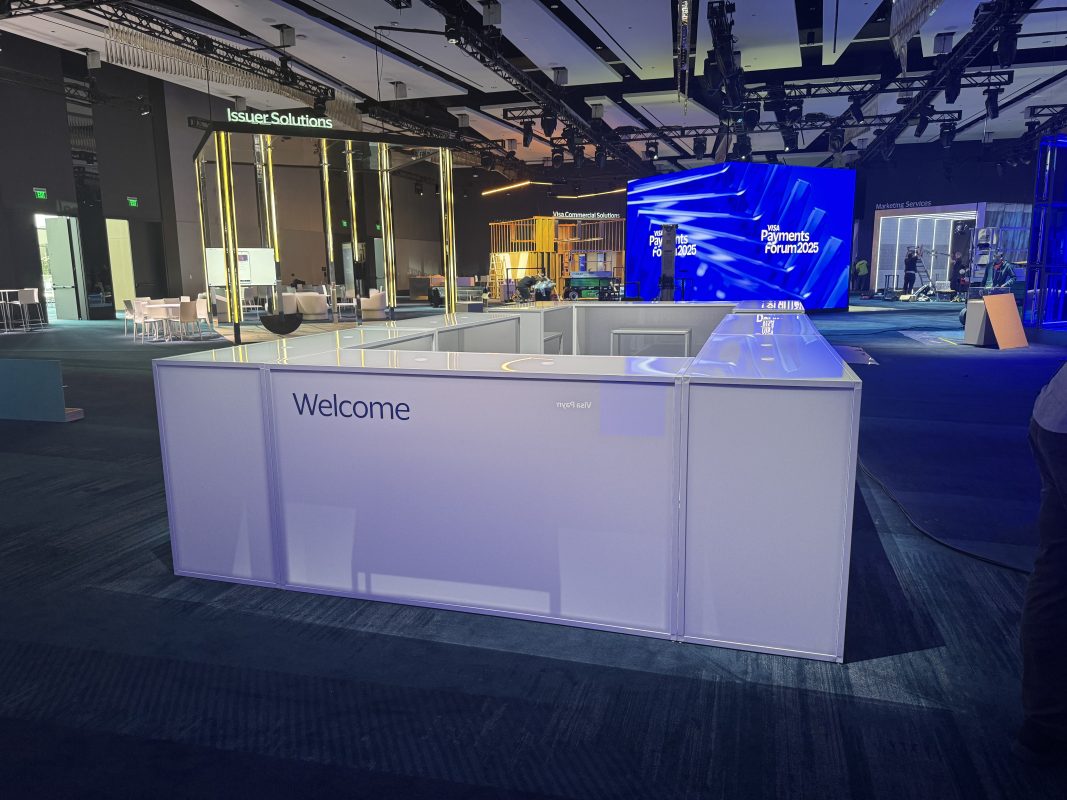
When designing your event space, two of the most visible furniture pieces are registration counters and event bars. While they serve very different purposes, both are guest-facing and brandable, making them essential touchpoints. So, how do you choose between them?
Registration Counters: First Impressions Matter
A registration counter is more than a desk — it’s the first guest experience at trade shows, conferences, and branded activations. It sets the tone for professionalism, organization, and brand identity.
Benefits:
- Guides guest traffic with a clear check-in point.
- Branding surface for logos, wraps, or messaging.
- Provides storage for badges, swag, or electronics.
- Reinforces security and data collection (sign-ins, scans).
Event Bars: Hospitality in Action
Bars are designed for interaction and refreshment, becoming natural gathering points. In many events, they’re as important as the stage.
Benefits:
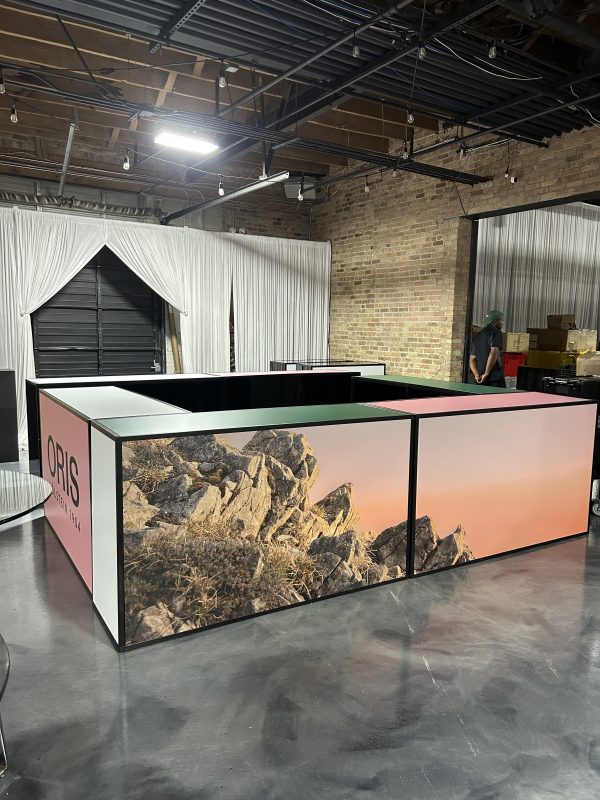
- Encourages mingling and networking.
- Can generate revenue or goodwill through sponsored drinks.
- Adds energy and ambiance with lighting and shelving.
- Doubles as branding opportunity via custom wraps or illuminated designs.

Key Considerations
- Licensing & Permits: Bars require alcohol permits and staff.
- Flow & Function: Registration belongs at entry points; bars work best in central or social areas.
- Cost & Staffing: Bars need more staff and logistics, while counters are simpler.
When to Use Each
- Trade Shows & Conferences: Registration counters are non-negotiable; bars may be added for evening networking.
- Weddings & Receptions: Bars are essential; registration may only be needed for large-scale or ticketed events.
- Brand Activations: Counters help collect guest data; bars keep them engaged longer.
Conclusion: Many events use both, but their functions differ. Registration counters handle logistics and professionalism, while bars create hospitality and energy. The best events balance the two.